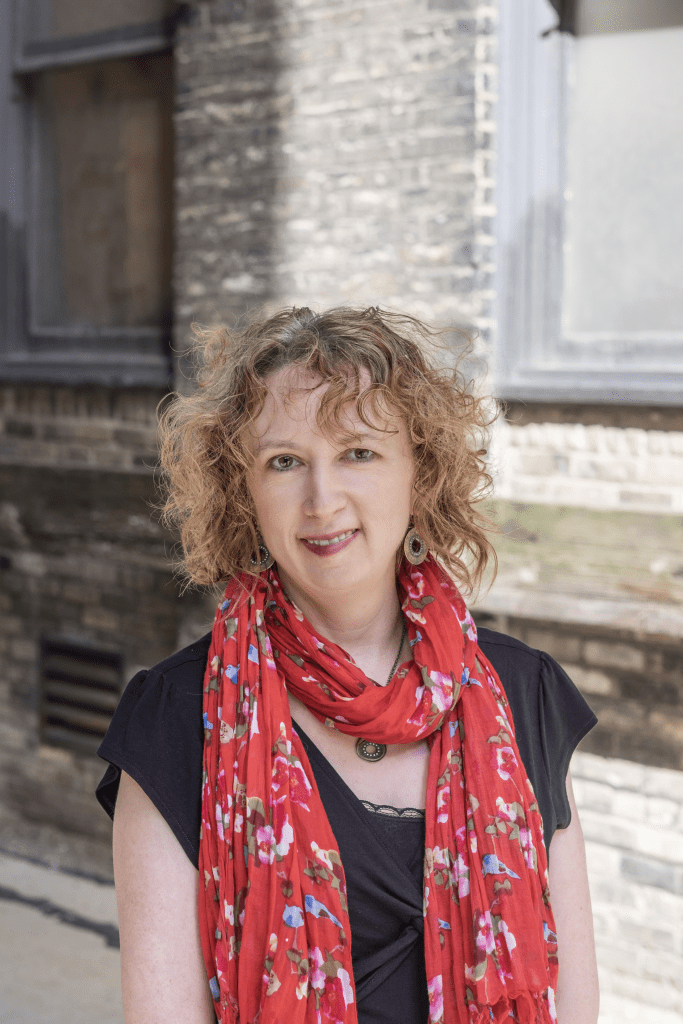
Over the past fifteen years or so, Rochelle Melander has been one of my writing mentors. I’ve taken a number of her workshops and worked independently with her on goal setting. As you’ll see from her bio, she is an active writer and coach. One of her special talents is helping those with ADHD become more focused and productive.
In this interview, I’ve asked Rochelle about her newly released book, Dancing in the Aisle: Spiritual Lessons We’ve Learned from Children. An earlier edition of the book, co-authored with her husband, Harold Eppley, was published in 1999.
MP: Why did you and your husband decide that now would be the right time to publish a new edition of Dancing in the Aisle: Spiritual Lessons We’ve Learned from Children? Were there any special requests or did you just perceive a need for our times?
RM: When I realized that the 25th anniversary was coming up, I thought it would be a good time to reissue the book. Dancing in the Aisle didn’t get much press when it came out. The internet was in the early stages, the publisher didn’t do a catalog that spring, and we had a limited budget. I have continued my work with children as an artist educator, and that work reminds me how important it is to pay attention to the voice and views of young people.
MP: So many things have changed in 25 years: political climate, technology, societal issues, decline in church affiliation — and you can probably name more. Yet the spiritual lessons in your book have as much relevance today as they did then. Do you care to elaborate?
RM: Although the culture has changed, core spiritual values have not changed. Values like sharing resources, caring for one another, and welcoming outsiders have not changed. The New Testament has about 100 “one another” verses—reminding readers to love and welcome one another. This book is all about how we can care for one another.
MP: Your own two children, along with their friends, inspired many of the chapters (lessons) in this book. Now they are adults, and some day you may have grandchildren. What is there about children — so much the same now as they were any time in history — that helps you stay grounded? (Or that helps us, the readers, remember that some things are unchanging?)
RM: The book was published after our son was born but before our daughter was born—so she appears only in the 25th edition. She’s also the girl in the cover photo. Almost all the stories are about either our friends’ kids or children we met through our work.
For the last 20 years, I’ve worked as an artist educator in libraries and schools. Every time I teach, I learn something. When children aren’t with their parents and aren’t expected to “behave” (and even when they are), they tell the truth. They see the core of every situation and aren’t afraid to voice it. As an adult, I am always weighing my words before I talk. But kids don’t do that. Because of that, they come up with the bold and tender words you read in the book. Being connected to that kind of energy is always grounding. It’s so real and honest!
MP: Each of your chapters includes an anecdote that involves children in some way. Then you show us how this relates to our own, adult, lives. Next you ground the topic in scripture, with a specific biblical reference, to provide further context and meaning — something for our spiritual nourishment as we navigate this life. At the end of each meditation (or lesson) there are questions to ponder on an individual basis or in a group as well as suggested activities related to the topic. What, if anything, do you wish to say about the cooperative process you and Harold went through to integrate all these elements? How did your educational backgrounds help you as you worked to completion of the book?
When we wrote the book, Harold and I were both working as ministers in the Evangelical Lutheran Church in American. We both have a Master of Divinity degree. I also have a Master of Sacred Theology degree in New Testament and Greek. We’d been preaching weekly for about ten years.
We’d edited a book called Starting Small Groups and Keeping Them Going, and I’d been facilitating trainings for small group leaders. We’d also written or edited a couple of small group resources, including our first book Growing Together: Spiritual Exercises for Church Committees. We were very interested in helping people reflect and connect about their faith and how they used it in the world. In other words—we wanted to support people in deepening their own faith and strengthening their connections in their community.
This background fed into the structure for the book. We wanted to ground the work in biblical stories and then invite readers to reflect on the ideas in the book, both on their own and in community. In addition, we wanted to provide a way for people to take the ideas into their own lives.
We had developed a writing process for our previous book that worked for this one. We talked through several story ideas and made a list. Each of us took responsibility for writing the first draft of half of them. Then, we switched—revising the other person’s work. The stories went back and forth between us until we felt like we had a good draft.
By that time, both of us had significant experience writing and editing, which helped us immensely. One of the challenges young writers face is “killing their darlings.” We were able to move beyond that and revise for the good of the piece.
MP: What are the major differences between the current edition of the book and the original? What were the steps you took to produce the final revision?
RM: The book has a new preface and introduction. In addition, we reviewed each essay and revised it to be more multicultural and inclusive. We revised stories, changed the children’s names, and rewrote the questions to reflect our current diverse culture.
MP: What are some of the ways you foresee this book being used — in individual homes, church groups, other settings?
RM: All of the above! I hope people use it to reflect on their own lives and their relationships with children. I also hope people will read and reflect on it in their church and meditation groups. But most of all, I’d like this to inspire people to talk to young people and think and write about how they inspired them!
MP: Rochelle, you always have a number of writing and teaching related projects and commitments. How do you manage to find time for all of this and still find time for your personal life?
RM: That’s the question I ask people on my blog! (writenowcoach.com/blog) I struggle just like everyone else. I like the idea of time-blocking or clustering tasks. I’ve tried to keep a regular practice of writing every morning, before I look at email or coach clients. I’ve also created a group called Show Up and Write (https://writenowcoach.com/show-up-and-write-writing-circles/), where people pay a small monthly fee to write every week together—and that gives me another three hours a week. Then, all my other tasks get blocked into afternoon slots.
I also have to be very careful not to overbook. I am very social and like to get out and connect with people. But when I do too much, I get tired. Resting is an important part of the creative process.
MP: How can you help our readers?
RM: If any of you are struggling to get writing done, I offer a few group opportunities for you: The Write Now! Writing Accountability Group, the Writing Goddess Group, and the Show Up and Write Writing Circle (https://writenowcoach.com/coaching-groups/)
I also offer individual coaching and some select editing services, mainly looking at query letters and pitches.
MP: Thank you, Rochelle.
Write Now! Coach Rochelle Melander is an author and ADHD-trained professional certified coach. She helps wildly creative people get stuff done. From writing and publishing books to finishing that work project–she’s got you covered. If you’re struggling to start or finish a project, connect with Rochelle to create a personalized plan for overcoming procrastination, dealing with distraction, and staying focused. Sign up for her Starter Kit: https://writenowcoach.com/starter-kit-page/
 Meet Me At the Corner