An Interview with Rochelle Melander

Over the past fifteen years or so, Rochelle Melander has been one of my writing mentors. I’ve taken a number of her workshops and worked independently with her on goal setting. As you’ll see from her bio, she is an active writer and coach. One of her special talents is helping those with ADHD become more focused and productive.

In this interview, I’ve asked Rochelle about her newly released book, Dancing in the Aisle: Spiritual Lessons We’ve Learned from Children. An earlier edition of the book, co-authored with her husband, Harold Eppley, was published in 1999.

MP: Why did you and your husband decide that now would be the right time to publish a new edition of Dancing in the Aisle: Spiritual Lessons We’ve Learned from Children? Were there any special requests or did you just perceive a need for our times?

RM: When I realized that the 25th anniversary was coming up, I thought it would be a good time to reissue the book. Dancing in the Aisle didn’t get much press when it came out. The internet was in the early stages, the publisher didn’t do a catalog that spring, and we had a limited budget. I have continued my work with children as an artist educator, and that work reminds me how important it is to pay attention to the voice and views of young people.

MP: So many things have changed in 25 years: political climate, technology, societal issues, decline in church affiliation — and you can probably name more. Yet the spiritual lessons in your book have as much relevance today as they did then. Do you care to elaborate?

RM: Although the culture has changed, core spiritual values have not changed. Values like sharing resources, caring for one another, and welcoming outsiders have not changed. The New Testament has about 100 “one another” verses—reminding readers to love and welcome one another. This book is all about how we can care for one another.

MP: Your own two children, along with their friends, inspired many of the chapters (lessons) in this book. Now they are adults, and some day you may have grandchildren. What is there about children — so much the same now as they were any time in history — that helps you stay grounded? (Or that helps us, the readers, remember that some things are unchanging?)

RM: The book was published after our son was born but before our daughter was born—so she appears only in the 25th edition. She’s also the girl in the cover photo. Almost all the stories are about either our friends’ kids or children we met through our work. 

For the last 20 years, I’ve worked as an artist educator in libraries and schools. Every time I teach, I learn something. When children aren’t with their parents and aren’t expected to “behave” (and even when they are), they tell the truth. They see the core of every situation and aren’t afraid to voice it. As an adult, I am always weighing my words before I talk. But kids don’t do that. Because of that, they come up with the bold and tender words you read in the book. Being connected to that kind of energy is always grounding. It’s so real and honest!

MP: Each of your chapters includes an anecdote that involves children in some way. Then you show us how this relates to our own, adult, lives. Next you ground the topic in scripture, with a specific biblical reference, to provide further context and meaning — something for our spiritual nourishment as we navigate this life. At the end of each meditation (or lesson) there are questions to ponder on an individual basis or in a group as well as suggested activities related to the topic. What, if anything, do you wish to say about the cooperative process you and Harold went through to integrate all these elements? How did your educational backgrounds help you as you worked to completion of the book?

When we wrote the book, Harold and I were both working as ministers in the Evangelical Lutheran Church in American. We both have a Master of Divinity degree. I also have a Master of Sacred Theology degree in New Testament and Greek. We’d been preaching weekly for about ten years. 

We’d edited a book called Starting Small Groups and Keeping Them Going, and I’d been facilitating trainings for small group leaders. We’d also written or edited a couple of small group resources, including our first book Growing Together: Spiritual Exercises for Church Committees. We were very interested in helping people reflect and connect about their faith and how they used it in the world. In other words—we wanted to support people in deepening their own faith and strengthening their connections in their community.

This background fed into the structure for the book. We wanted to ground the work in biblical stories and then invite readers to reflect on the ideas in the book, both on their own and in community. In addition, we wanted to provide a way for people to take the ideas into their own lives.

We had developed a writing process for our previous book that worked for this one. We talked through several story ideas and made a list. Each of us took responsibility for writing the first draft of half of them. Then, we switched—revising the other person’s work. The stories went back and forth between us until we felt like we had a good draft.

By that time, both of us had significant experience writing and editing, which helped us immensely. One of the challenges young writers face is “killing their darlings.” We were able to move beyond that and revise for the good of the piece.

MP: What are the major differences between the current edition of the book and the original? What were the steps you took to produce the final revision?

RM: The book has a new preface and introduction. In addition, we reviewed each essay and revised it to be more multicultural and inclusive. We revised stories, changed the children’s names, and rewrote the questions to reflect our current diverse culture. 

MP: What are some of the ways you foresee this book being used — in individual homes, church groups, other settings?

RM: All of the above! I hope people use it to reflect on their own lives and their relationships with children. I also hope people will read and reflect on it in their church and meditation groups. But most of all, I’d like this to inspire people to talk to young people and think and write about how they inspired them!

MP: Rochelle, you always have a number of writing and teaching related projects and commitments. How do you manage to find time for all of this and still find time for your personal life? 

RM: That’s the question I ask people on my blog! (writenowcoach.com/blog) I struggle just like everyone else. I like the idea of time-blocking or clustering tasks. I’ve tried to keep a regular practice of writing every morning, before I look at email or coach clients. I’ve also created a group called Show Up and Write (https://writenowcoach.com/show-up-and-write-writing-circles/), where people pay a small monthly fee to write every week together—and that gives me another three hours a week. Then, all my other tasks get blocked into afternoon slots. 

I also have to be very careful not to overbook. I am very social and like to get out and connect with people. But when I do too much, I get tired. Resting is an important part of the creative process.

MP: How can you help our readers?

RM: If any of you are struggling to get writing done, I offer a few group opportunities for you: The Write Now! Writing Accountability Group, the Writing Goddess Group, and the Show Up and Write Writing Circle (https://writenowcoach.com/coaching-groups/)

I also offer individual coaching and some select editing services, mainly looking at query letters and pitches.

MP: Thank you, Rochelle.

Write Now! Coach Rochelle Melander is an author and ADHD-trained professional certified coach. She helps wildly creative people get stuff done. From writing and publishing books to finishing that work project–she’s got you covered. If you’re struggling to start or finish a project, connect with Rochelle to create a personalized plan for overcoming procrastination, dealing with distraction, and staying focused. Sign up for her Starter Kit: https://writenowcoach.com/starter-kit-page/

Not All Those Who Wander Are Lost

I love walking outdoors, especially in areas where I can enjoy the sights and sounds of nature, far away from highways and crowds. For six years or more before the pandemic, I was part of a group, “Walking in the Woods,” led by Dave O’Brien, of Hales Corners, Wisconsin. Each week we would meet at the Community Enrichment Center outside Clement Manor and carpool to a park or other wooded area that Dave had selected for exploration. With Dave always at the lead, we’d explore natural areas around Milwaukee, stopping now and then to take photographs or make a close observation of something which had captured our special attention. Sometimes we climbed over fallen trees or skirted around sodden areas. More than once we reached an impasse and had to turn back. Though Dave never admitted to getting lost, we hikers were sometimes dubious. Maybe we were just “wandering” through the woods. Not all those who wander are lost.

~ ~ ~

My cousin Joanne’s husband, Glenn, didn’t mind getting lost. Whether he was driving their RV around the country, chauffeuring Joanne up north in the family sedan, or veering off the beaten path on his motorcycle, it was fine with Glenn – more chance to see sights he otherwise would have missed. At an intersection, uncertain whether to turn left or right, he knew that either way would provide interesting scenery. These days GPS can locate us anywhere on the world map, but such a contrivance would have spoiled Glenn’s sense of adventure and discovery that come only when a person dares to venture into uncharted territory. Not all those who wander are lost.

~ ~ ~

Freewriting is my favorite kind of writing. There are other names for it – warm-up drafts, wild writing, stream of consciousness, and Morning Pages. A writer doesn’t have to think about spelling or rules of grammar when her mind is in this writing mode; she merely has to let the thoughts come in whatever order they appear and type them out (or write them longhand) as quickly as she is able. Just like Glenn, following his instincts to turn left rather than right, or just like Dave, who would lead us into a tangle of underbrush with the certainty of a leader,

I love to let my thoughts off leash, following them wherever they take me. Sometimes I took those first drafts, with just a bit of editing, to the roundtable critique groups at Redbird Studio and Red Oak Writing. I called them MP’s MPs – Marjorie Pagel’s Morning Pages. “I’d love to live inside your head sometime, to follow those thoughts around,” several of my writing friends would tell me. I continue to be delighted by the twists and turns of thought my freewriting takes me. I’ve learned there are new discoveries in store for all of us every day. Not all those who wander are lost.

Remembering Jerry Jenkins

For many years at this time my husband and I both had Christmas songs running through our heads. We were preparing for the annual Christmas concert of the Community Chorus. We held rehearsals in Hales Corners, but the seventy or so singers came from many different communities in the Milwaukee area.

For over forty years, our director was an energetic, talented man, Jerry Jenkins, from Greendale. Most of his career had been with the Whitnall School District, and many of the Community Chorus members had gained their love of music under his direction.

Jerry died this year, on August 18, yet even in his final month he thought he’d be able to direct the chorus for one more concert. Although the Community Chorus will be under new direction, many of us in the audience and in the chorus will be remembering Jerry.

At his funeral service, Jerry’s longtime friend, Judi White gave a beautiful tribute to our much-loved musician. She has given me permission to use parts of her eulogy here.

* * * * * * * * * * * * * * * * * * * * *

Judi White’s Tribute

Beethoven is widely regarded as the greatest composer who ever lived. Mozart’s music is admired for its melodic beauty, formal elegance and richness of harmony.

And from this day on – Gerald A. Jenkins will forever be remembered as a piano virtuoso, teacher, arranger and conductor who lived and breathed and shared the love of music his entire life.

Jerry was born in Pembine, WI, a small town located 80 miles north of Green Bay in Northern Marinette County. Pembine started as a logging community in 1887, and a lumber camp still operated there when Jerry was just a toddler. Jerry’s father was the mayor of Pembine for a spell but Jerry said that the population was so small that if you hung around long enough everyone got a turn at being mayor!

Jerry was the oldest of three children born to August and Mildred Jenkins; with younger sister Erma arriving 4 years later and little brother, Clayton four years after that. Born with a hole in his heart, he had to leave strenuous activities and sports to his siblings while his own interests turned to music – the piano in particular, but I did hear that he was known to play a pretty mean polka on the accordion. Though he never talked about that.

As a student of almost every piano teacher in Pembine, Jerry advanced at a young age to a level of prowess beyond his teachers. Even a Catholic nun clutched her rosary beads, looked to heaven and said: “I have nothing left to teach this young man.”

He tried to pass his talent on to Erma but in frustration would close the piano lid on her little hands. Nonetheless, they did form a brother/sister act that entertained the patrons in his parents’ tavern – Jerry at the piano and little Erma singing right alongside. In his adult years he tried to teach his niece Margie to play, but didn’t smash her fingers. He used money as the incentive, offering her 25 cents for each song she learned. Unfortunately, Margie says, she never learned.

During his teen years, Jerry stocked the family bar and worked as a caddy at a local golf course. Then, after graduation from high school, he put on his Buffalo Bill buckskin jacket –complete with fringe on the chest – and bravely made his way to the BIG CITY of Milwaukee and attended college at UWM. Not too long ago that Jerry told me he wished he still had that jacket!

Academia and music filled his studies, and with degree in hand it wasn’t long before he found his first teaching job at the high school in Lake Mills, WI. There he lived in a rooming house for a while with a kindly landlady who supplied the meals and even packed him a lunch to take to school. He wasn’t much older than the students he would be teaching!

As time moved on he took on the position of director of the Moravian Church Choir in Lake Mills, a position he held for 50 years. Many of his former Lake Mills students joined that choir and some are still in it today.

It was in his early twenties that Jerry underwent his first open chest surgery to repair the hole in his heart, a heart that would never be as strong as he hoped and that would eventually contribute to his passing. It was his heart that kept him out of the service when the Vietnam War called; and it was a heart that broke when his brother Clayton, who entered that war as a Special Forces Marine lost his life in June of 1969.

Jerry’s career path led back to Milwaukee, and to the Whitnall School District where he taught grade school, middle school, and high school classes for 29 years – often traveling back and forth between three different classrooms, eating his lunch on his lap.

It was in those years that Jerry continued to touch the lives of thousands of young people, through classroom instruction, his many choirs and glee clubs, and the numerous state competitions for which he prepared his students and choirs. He also served as accompanist for community-wide musicals.

For fun Jerry became involved in the annual talent shows and casino nights put on by the members of the St. Martin of Tours church in Muskego. And what fun it was! These events drew musicians, actors and wannabe’s from all around metro Milwaukee and beyond. His talent became widely recognized. It was at that time Jerry became good friends with Hales Corners resident Jim Wensing, who became a founding member of the Community Chorus. Jim had a beautiful Irish tenor voice and Jerry accompanied him on gigs throughout the state. While Jim had visions of glory, Jerry lugged his suitcase full of music from job to job. They rarely earned enough to pay for gas, but who cared? They had fun.

As luck would have it, once a year Jerry would accompany longtime choir director, John Munger, for his annual Fourth of July concert in downtown Greendale. It was there we learned of Jim’s gift of blarney because after the concert in 1984 Jim convinced Jerry to become the new director of the Community Chorus. Jim sweetened the deal by offering a salary which the bare-bones chorus could never afford – because they had no money in the treasury.

In spite of all this talent and public recognition, Jerry remained a very private person. He lived simply, renting an apartment in Greenfield for so long he probably paid for half the complex. He was an avid Badger and Packer fan, and during COVID began to follow the Bucks. He enjoyed spending time with his sister Erma and her children. He also liked walking at Southridge, meeting friends for breakfast, and practicing, practicing, practicing. His neighbors will definitely miss hearing Christmas music in August!

Like all of us, he did have a few…quirks:
• like storing light bulbs in his dishwasher.
• and never letting anyone into his apartment. If we needed to drop something off, these were the rules: Knock – Drop – Run.
• He never ever talked age or about his “soup day.” (This was our code for birthday because I made soup his gift.)
• And how about Union Time – rehearsal started at 7:00 p.m. Not 6:59 or 7:02 –
7:00 p.m. on the nose! But whenever you’d say, “I’ll meet you at such and such a time,” – annoyingly he’d always be there 10 minutes early.
• And what was it with the post-it notes and paper clips? Look around his stand after rehearsal and you’d find a pile of crumpled notes and enough paper clips to string a chain from here to Forest Home Avenue!
• Jerry had perfect pitch, a metronome in his head AND he was clairvoyant: as in, “I could hear the tenor note missing in that measure.”

Cooking was his kryptonite – I remember the time he bought an apple pie baked in a bag from the Elegant Farmer in Mukwonago. Well, he liked his pie warm so he put the pie along with its grease-coated bag into the oven to warm it up. And you guessed it – the bag started on fire, the apartment filled with smoke, and Jerry panicked, throwing a pan of water into an electric stove. Needless to say, he never got to eat that pie and he never again bought anything baked in a bag. (He did get to meet the nice oven repair man and after that day he switched to frozen banana cream pie.)

Recently, there was a repeat performance in his school of culinary mishaps; only this time it was a forgotten pizza in the oven that started on fire. Jerry grabbed the burning pizza and flung it on the floor where it landed cheese side down and to this day is melded to the linoleum. [Aside, to niece Margie: Margie, I’m warning you that when you pick up that rug in front of the stove you will uncover a petrified cheese pizza – with more than a bit of charring around the edges. Take a tip from the Beatles and “Let It Be.”]

Technology – don’t even get me started. Jerry thought technology was an invention of the devil! Cell phone . . .are you kidding? This man is still mad at AT&T for dropping the blue princess phone from their product line. Computer, lap top, email, tweet, Twitter, texting –
all words from a language so foreign it was like hearing the voice of Charlie Brown’s teacher – woa woa woa! – and he would just glaze over.

If you were lucky enough to be family or friend he was generous to a fault: loyal, supportive, thoughtful and willing to lend a hand, a buck, or a shoulder to cry on. Jerry liked things even keel – no conflict or drama. He was uneasy with unrest. And no political talk, PLEASE!

Never wanting the limelight and without losing too much hair, Jerry directed, guided, pushed, pulled, scolded, and led the Community Chorus for 39 years. That’s 78 seasons with 16 songs a season and 13 weeks of rehearsals each, not to mention the sing outs and public concerts…you get the picture. He had to love it to do it!

He directed when he was sick, when the air conditioning blew his music off the stand, when an evening concert at the Domes was so dim he asked that the overhead lighting be turned on (spoiler: there is no overhead lighting at the Domes). He even directed when there were more of us on the risers than people in the audience…all with that perfect conductor’s stance and that eye roll that silently sent the message: WATCH MY BEAT!

His love of music, his skill at the keyboard and his aim for excellence reached far beyond the classes he taught or the choirs he led. For his music made the world a bit better, a bit happier – and that is the true measure of success.

After a lifetime of piano, his saddest days came when he could no long play because his fingers would bleed from the blood thinners he needed to keep his heart going.

You could say his life and career can be compared to tossing a stone in the river…you never really know where the ripples will go. One of his students went on to Broadway, one went on to the opera; many direct choirs of their own and one, a published composer, recently dedicated one of her compositions to him. We can all agree that his legacy will live on through his students, his choirs, his family, and those lucky enough to call him friend.

Jerry always got nervous if my narration ran too long … but before I go I’d like to share a short prayer that found me the day before Jerry took his final BOW:

May I go now?
Do you think the time is right?
May I say goodbye to pain filled days and endless sleepless nights?
I’ve lived my life and done my best, an example tried to be.
So can I take that step beyond and set my spirit free?
I didn’t want to go at first, I fought with all my might.
But something seems to draw me now
to a warm and loving light.

Thank you all for loving me. You know I love you, too.
That’s why it’s hard to say goodbye and end this life with you.
So hold me now, just one more time and let me hear you say,
because you care so much for me,
you’ll let me go today.

* * *
Thank you, Judi White, for this lovely tribute to a remarkable man.


Keeping History Alive

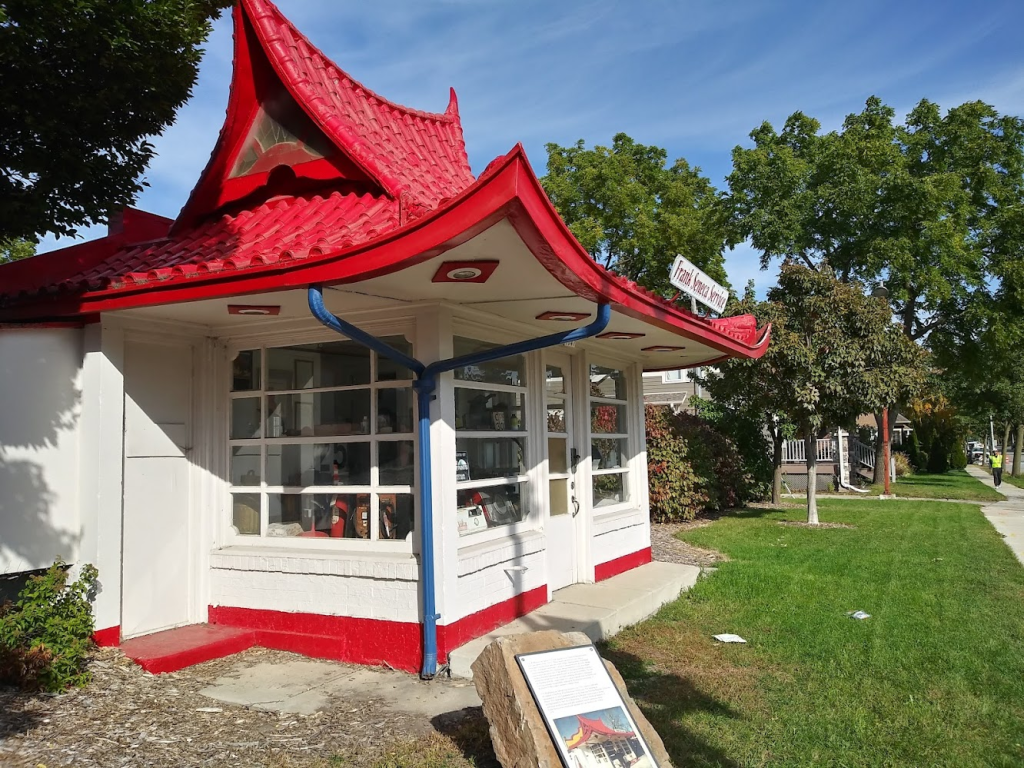
Every time I drive along National Avenue in West Allis, I’m attracted to this old gas station at 76th Street. Last week I had a chance to walk by so took a photo and noted a sign with this information of historic significance.

“This Wadham’s Gas Station is a small pagoda style (Asian-influenced curved roof) gas station of the 1920s. These unique gas stations were once a prominent regional chain and only a few remain standing today. Milwaukee architect Alexander Eschweiler’s design is considered to be an iconic design in gas retailing history. His ingenious design married a typical steel-frame; glass-walled gas station box of the period to a swooping roofline, creating a building that was functional and efficient, as well as eye grabbing. The idea behind the design was to use color and a striking silhouette to distinguish the building from the visual clutter of a typical roadside strip. Its flamboyant roof was instantly recognizable, making the building the centerpiece of Wadhams Oil & Grease Company’s market image.

“This Wadham’s Gas Station was restored to its 1950s state in 2000 with the support of the West Allis Historical Commission. The building is designated as a Local Landmark and is on the State and National Registry of Historic Places. This landmark building stands at its original location and is owned and maintained by the City of West Allis. It contains historical displays of petroleum products and equipment used by previous owner Frank Seneca who owned and operated the Gas Station from 1954 to 1978.”

Zooming Through the Pandemic

There’s hardly anyone these days who has not heard of Zoom. I’m not talking about the action word associated with superheroes, of course, but the internet wonder that has kept people connected during this overlong pandemic.

People working from home have used it to conduct their business. Teachers in public and private schools at all grade levels have used it when the risk of meeting in person was too high. Various groups have used it to conduct meetings or hold webinars. Some church bodies have conducted worship services using this platform. Families used it to see one another face to face.

Here’s a handful of instances in my own life: My husband, Jerry, and I attended the funeral service of our long-time friend Jim Shapiro. We witnessed the wedding of Carolyn Gritt and Tom Wellhouse – her daughter Nancy making arrangements by cellphone. I’ve attended and participated in several poetry readings as well as writing workshops, Silver Sneakers exercise sessions, and Weight Watcher meetings. In those months when we kept ourselves home, socially distanced by miles rather than the relatively safe six feet, we could see those familiar faces – unmasked faces, with genuine smiles – looking back at us. It wasn’t the same thing as an in-person gathering, and there’s something cold about a “virtual hug.” But I give us all credit for our ingenuity, our perseverance in dealing with the dangers of the virus while keeping our connections and our shared endeavors intact.

During the pandemic I met two young women who feel as real to me as many of my immediate neighbors. One lives on the East coast, the other on the West. And, by the way, they’re both over 40, which to me is young. They are my champions, my motivators, the women who have put a smile on my face and enthusiasm in my actions. Let me briefly introduce Alejandra Costello and Laurie Wagner.

Here’s what both women have in common. They can look out at an audience encased in little black boxes and talk to them as if they are sitting right there. Their faces light up with authentic joy to have us all together again. Now Laurie, I might add, also connects with us through her private You Tube channel. Hello friend, she’ll say, looking straight into my eyes, and even though she can’t hear me, I sometimes say hello back.

Laurie Wagner

Both of these women are passionate about what they have to share with us. In Laurie’s case, it’s writing – more specifically, Wild Writing, similar to what I learned some years ago from Natalie Goldberg in her book Writing Down the Bones. For each session Laurie brings a poem and reads it out loud, talks about it a bit and then talks about our “wild” writing practice and how certain lines in the poem can be used to launch us on a 15-minute writing spree. We’re encouraged to write longhand, without editing, allowing any thoughts that come to mind work their way onto the paper. There’s freedom in this practice because we’re not required to share. We don’t have to turn it in for a teacher to grade. It’s ours, and if we choose, we can post it on a private Facebook page. Or maybe we’ll read it at a special online meeting of Wild Writers in a “Campfire” session. This is the kind of workshop that appeals to me; I’ve generated so much first draft copy in the past two years it will take me another two to claim the best of it and whip it into shape for a real audience. Like you, for instance.

Alejandra Costello

Now on to Alejandra. I can almost hear her melodic voice greeting us at the start of each session: Hello everybody. Her smile is genuine and welcoming. Later, when she takes questions or listens to someone discuss a problem, Alejandra is one of the most attentive listeners I’ve ever known. She doesn’t interrupt, and if she doesn’t have specific advice to offer, she has a way of asking questions which usually help the individual reach her own conclusion of “the next step.”

What is this next step? you might ask. Of course. It’s all about organization and decluttering. For most of us, it’s decluttering and organizing our homes and the various rooms and spaces within our homes that we’re working on. But this last week there was a session dedicated to tax preparation. Sometimes a man who specializes in organizing photos is featured. There are at least three sessions every week, and the replays are available for a month, so I can decide “Today is decluttering day” or “Today I need to get going on [a certain] project,” and I can tune into a previous session for Alejandra-inspired motivation.

Sometimes there are as many as two hundred people (mostly, but not all, women) from all over the United States and in other countries working at their own tasks, plugging away on their own projects while Alejandra’s giant timer reminds us how long we have for this session.

I’m not going to say my home and my assorted papers are all organized, but at least I’m making progress and having a bit of fun doing it.

For more about Laurie Wagner and Alejandra Costello, here are a couple of links. And I’ve posted their photos too. They’d be glad to have you join them for a session of wild writing or decluttering.

WILDLY FREE ELDERThe Artistry of AgingWild Writing With Laurie Wagnerwildlyfreeelder.com/wild-writing-with-laurie-wagner/

Get Organized With Alejandra Costello’s Video Training » Alejandra.tv

In the Mood

Christi Craig is one of my writing mentors. I love her prompts — they get me to write about subjects I hadn’t thought of writing about. Take this one, for instance: I wasn’t necessarily “in the mood” to write about the prompt for the week (mood) but when I posted this, everyone in the group liked it. I hope you will too.

~~~~~~

Whenever a particular word lodges in my brain, the music-loving side of my personality joins in. Hey, she says, remember “I’m in the Mood for Love”?

Why of course I do, and You Tube offers a couple of choices. First there’s Frank Sinatra crooning seductively, and I can imagine myself on the dance floor. No particular partner in mind but if it were Frank himself to cut in and say, May I? I could easily be in the mood for whatever  he had in mind. Jilted partner? you might wonder. Well, whoever he is doesn’t emerge in my imagination with any identifiable features so it’s okay. In my reverie I’ve simply switched partners because I was very much “in the mood.”

Inmood2-1-.JPG
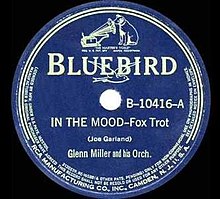
Remember when we listened to music like “In the Mood” on records like this?

But take a different recording – one by Nat King Cole – and he’s singing a jazzed up version of the same song. Any lovestruck couples on the dance floor would have to find some quiet corner or else – get into the mood with Nat, doing the jitterbug or some other fancy-footwork dance.

Now that in turn reminds me of the time back in the 1970s when I was a member of a women’s chorus. Women of Note, we called ourselves, under the direction of Margaret Purser. We had chosen to choreograph Glenn Miller’s popular jazz song “In the Mood” for a community-wide variety show. There we were, all thirty of us outfitted in our pink dresses going through our routine with as much grace as you might imagine from a group of enthusiastic middle-aged women showing off on stage. I wish I had a video.

I believe that music can affect our moods – bring us up or bring us down – it’s a matter of choosing just the right kind of music, the right song, the right tempo. A person just has to know which songs or symphonies to play on a given day. Something to match the current mood – or something to draw us out of it.

It’s the same with colors. Moods can color our outlook on almost any situation. It could be a sunny and glorious day outside but if the cloud of gloom has settled over your head, well sometimes there’s little you can do other than give in to a particular mood. Just remember – moods can be catching, and pretty soon everyone around you may find it difficult to maintain a sunny disposition when forced to contend with your surliness, sullenness, self-pity. . . .and all the rest.

One of my favorite stories about my granddaughter, Ella, comes from when she was 3 years old, sitting at a table with her dad and coloring. She put away the blue crayon and paused, considering her other choices. “How about red?” Robert suggested but she turned it down. “Green?” No again.

Enchanting Unicorns Coloring Book - OOLY

“How about yellow?” Ella’s patient father offered, and her face lit up as she reached for the crayon and resumed her coloring. “Yellow understands me,” she confided to Robert.
I think I know what Ella meant. Some days there are certain songs, certain colors, certain people that cheer us up if we’re feeling down. They match the color of our mood. They “understand” us.

A Bookcase and a Phonograph

My father, an excellent carpenter, crafted a beautiful wooden bookcase out of an old icebox. The icebox had been replaced by an electric Fridgidaire in the 1940s and came with us from Milwaukee when we moved to the farm. The bookcase, I remember, was stained a golden brown and had three separate shelves which held all our family’s small collection of books. It was located in the upper hallway: on the southeast corner of the second floor, at the very top of the stairs.

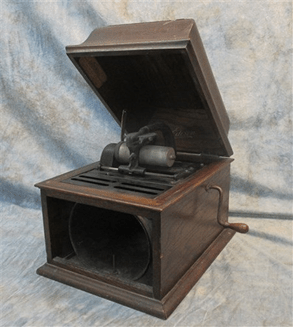
On top of that bookcase sat another treasure from my growing-up years: a wind-up phonograph that played cylindrical records.  My mother and her sisters had received the old Edison phonograph when they were girls growing up on a Minnesota farm. It had been a gift from an aunt who favored them, and for some reason it ended up with our family, though my cousin Joanne remembers having it at their home sometimes too. Today it belongs to another cousin, Judy, in Oregon whose mother Mae was one of the co-owners of this musical gift. Joanne and I hope that someday it will be donated to a museum for others to enjoy.

To play one of the scratchy-sounding cylinders, which were kept nearby in a fabric-lined laundry basket, I would first raise the lid of the wooden box, carefully position the needle at the outer rim of the cylinder, turn the simple switch from off position to on, and then sing along with one of the songs our whole family had come to learn by heart.

There was “Oh Katerina” and “I Laughed at the Wrong Time”; there was “Casey Jones” and “What Does the Little Dog Mean When He Says Bow Wow?” As the phonograph wound down, the tempo would slow until the last syllables died out and we would have to crank it up again.

I just located a similar machine being sold on Etsy for $350. Now I think I should pass that news along to Cousin Judy. If she decides not to donate it to a museum, she could probably make good use of money like that.

The Romance of Anna Smith

Three years ago I published a book of stories, The Romance of Anna Smith and Other Stories, with the help of publisher David Gawlik of Caritas Communications. 

“How long did it take you to write that book?” is a question I was often asked, and I didn’t have a short answer. Many of my stories were memoir so they were in the pre-drafting stage for many years. In the mid-1970s I started to get serious about my writing so looked for teachers and writing groups for direction. Some of the stories in my collection started taking shape way back then. Over the years, I amassed quite a collection of stories and “story starters” (not finished) and I’d go back to my favorites and revise them, using comments and suggestions from people in my writing circles to guide me.

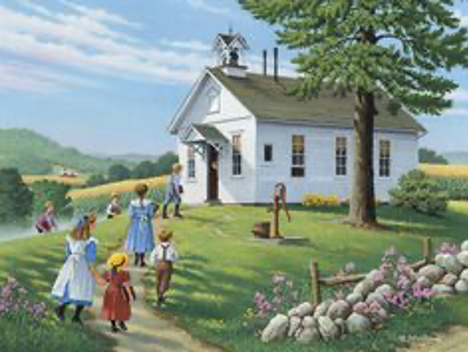
The very first story in my collection – also the story of the title – is “The Romance of Anna Smith,” about a teacher at Sheldon School, which I attended from 1947 – 1955. Miss Smith was the teacher (“schoolmarm”) who taught all eight grades when I was in 4th and 5th grades. She came back to us when I was in 6th grade, but by then she had married and so we called her Mrs. Hallman. 

The focus of my story is the “romance” of this much-loved teacher, as seen through the eyes of two schoolgirls – myself and my friend, Sylvia Robinson. I’m posting that story on my blog today. If you’d like to read the rest of the stories in this collection, you can find it on Amazon

Or you can order an autographed copy directly from me for $10, including postage. For details, contact me here.


Click page 2 to read an excerpt

One-Room Country Schools

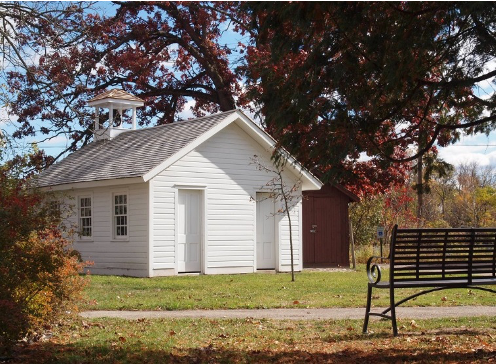
From 1947 to 1955 I attended Sheldon School, a one-room country school in Marquette County, Wisconsin. I haven’t been able to track down a photograph of Sheldon School from those days, and I haven’t found another school that closely resembles it. The image, though, remains fixed in my memory. It was larger than the one pictured in the photograph below, from a website about John Muir, who lived in the area for several years during his childhood. 

Photo from John Muir Home

For one thing, there were cement steps leading to the front door of the white-framed building. It was larger too – a coatroom at the entrance, separated by a wall from the classroom. At the back of the classroom was a huge woodburning furnace, which kept us warm in the winter months. On the wall opposite the furnace was a water cooler and a place for us to put our lunch boxes. 

“In the Wisconsin heyday of the one-room school, about 6,200 were operating in rural areas across the state, said Dale Williams, site director of the Reed School in Neillsville, which today is a historic site operated by the Wisconsin Historical Society. “They hit their peak in the 1930s, Williams said. “By the 1960s, they were virtually all gone. A few tiny schools remain in the state, including one on Madeline Island, but most have vanished or been transformed into museums, gift shops, bed-and-breakfasts and the like.” (from Madison.com) In the case of Sheldon, the school was remodeled in the 1960s as an attractive country home for the in-laws of George Robinson (my classmate, named in the story) and is now owned by George and his wife, Christine. 


For other photographs of one-room country schoolhouses, see:

Remembering My Mother, Vivian Johnson: Social Distancing and Isolation in Rural Wisconsin – 1940s/50s

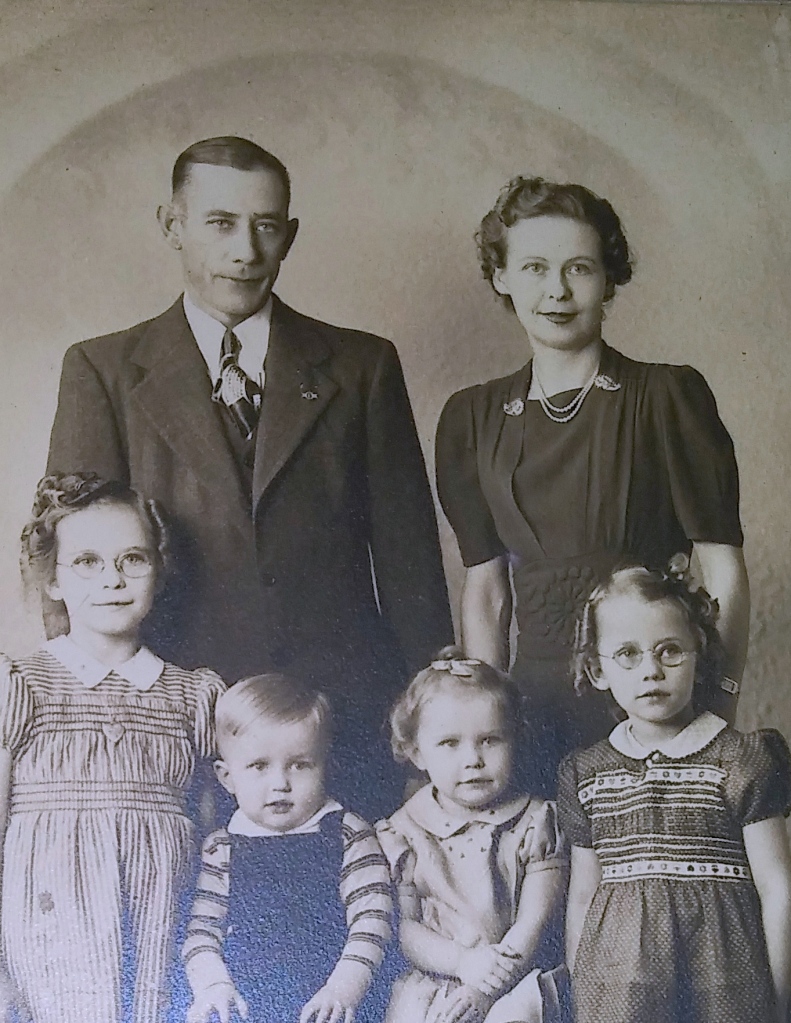
This photograph of our family was taken when I was four years old, before we moved to the farm. My mother’s pleasant facial expression is the same one she wore for family and friends, throughout her life.

This morning I was thinking about my mother, Vivian Ellingson Johnson, who spent many years in virtual isolation on our little farm in Marquette County. This was before we had TV. We had no telephone. She didn’t drive. My father was gone weekdays working in a foundry at International Harvester in Milwaukee in order to make enough money to feed his family and pay the mortgage on our small 100 acre farm. He had bought the farm on land contract so during hard times (like strikes and lay-offs from International Harvester) he would ask the mortgage holder for a little extra time until there was enough money in the bank to pay. 

But back to my mother. During the week when we four children were in school, her only connection to the outside world was the radio. There was a little one perched on top of our Frigidaire and a large wooden one in the living room. WTMJ came in clearly, bringing her such soap opera heroines as Stella Dallas and Lorenzo Jones’s wife, Belle. As the World Turns and Search for Tomorrow brought melodramatic life stories to her farmwife’s inner life. 

And there were her letters. Lovely penned letters at our kitchen table — a daily ritual. After they were each sealed and affixed with a three-cent stamp, she would walk across the road, put the letters in the mailbox, raise the flag to signal the rural mail carrier There’s mail here! And the highlight of every day except Sunday was to retrieve other mail from the mailbox. She could keep in touch this way with her mother, Ella, in Milwaukee, her sister Mae in Oregon, other sisters, in-laws, relatives, and friends in other places, mostly Minnesota and Wisconsin. Mom was a wonderful letter writer, but since her life was routine, she filled those stationery pages with highlights of her simple life. 

Our two nearest neighbors in walking distance were two bachelors — Otto Zellmer on the east, Edwin Klawitter across the road and a bit west at the end of a long driveway. Neither had a phone, so when she got sick in the middle of the night, my 15-year old sister Wanda (who had a special farmers permit) drove to the nearest phone, woke Helen and Harold Schoenfeld and called the doctor in Montello, 8 miles away. He came to our farmhouse that night and, though there wasn’t much he could do to help her, diagnosed her pain as gallbladder. Mom had surgery later that year and our aunt Maisie came from Milwaukee to stay with us.

Before we moved away from Milwaukee, Mom had friends and relatives walking distance from where we lived, and she could take a bus or streetcar to places in the city. 

Although I didn’t give it much thought at the time, I suppose Mom got lonely sometimes on the farm. But she wasn’t one to complain. 

On the farm she found plenty of things to keep her busy. She liked to sew and always had one or more projects going. She was an excellent baker too. When we came home from school there was often freshly baked bread, pie, cake, or cookies. 

Then too she had the dog, the chickens, and a few other farm animals to keep her company. And sometimes the neighbors from two or more miles away — the ones with cars — would stop by. But not too often. And then, as I said, she had Gordon Hinckley from WTMJ on the radio. And those soap operas. 

Mom didn’t have  TV – that came later, when I was in high school. Sometimes I wonder what she’d think of today’s technology: computers, emails, smart phones, Facebook, Twitter – and Zoom.

Even without all that, she survived. And so have I.